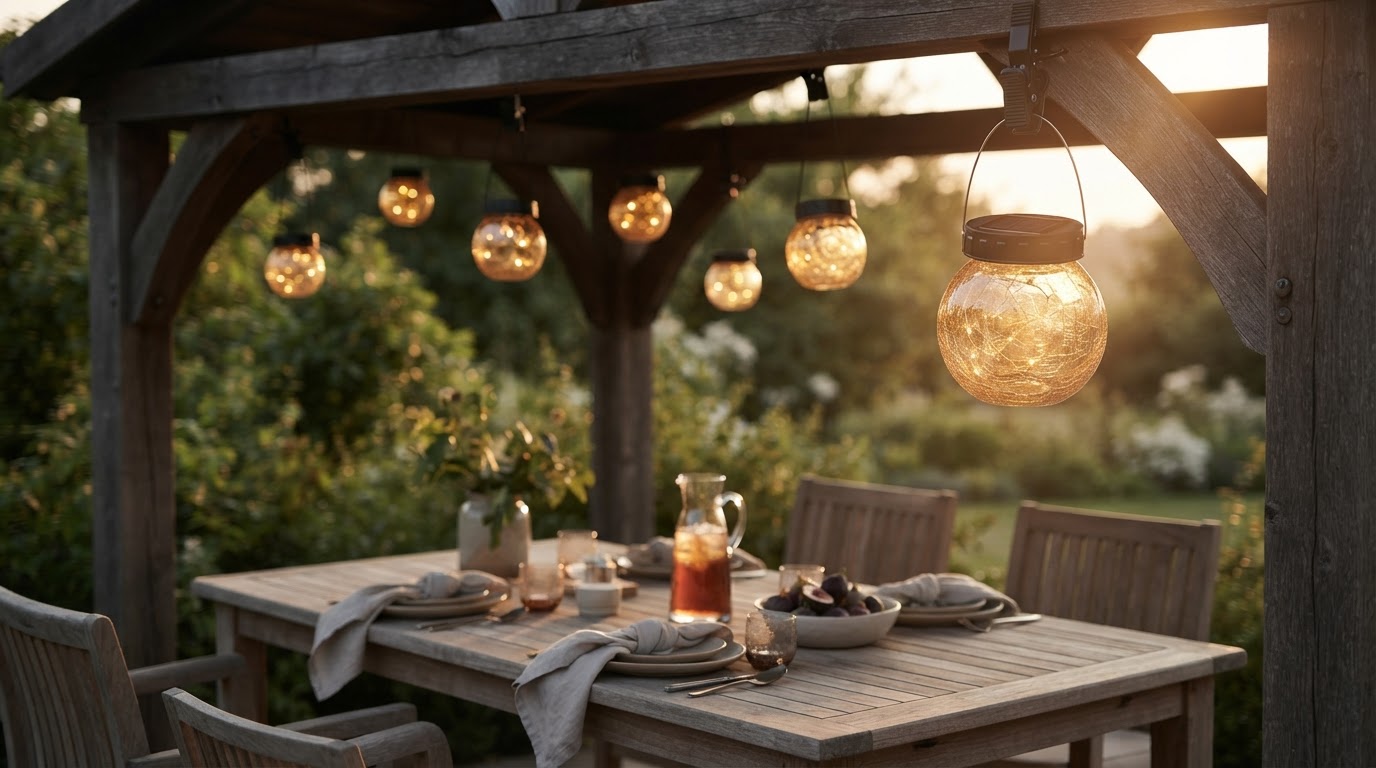
Solar Hanging Lantern Use for Gazebo Lighting Systems
 Daniel OkaforField Tester
September 17, 2026. This evaluation explores the practical application of clip-on solar systems for overhead gazebo structures. It is written for homeowners seeking reliable, cord-free illumination for semi-permanent outdoor shelters.
The Challenge of Gazebo Illumination without Wiring
When I first set up a wooden gazebo in my backyard, I realized the immediate limitations of traditional electrical work. Running conduit across thirty feet of open lawn wasn't just expensive; it felt like overkill for a space I only use in the evenings. I turned to solar solutions, but found that standard stake lights did nothing for the interior volume of the structure. The primary hurdle with gazebos is the roofline. Most solar units require direct southern exposure, yet the very nature of a gazebo provides shade. I tested this for three weeks to see if clip-on units could actually harvest enough energy while tucked under the eaves. According to Nature Power Products, their Solar Hanging Clip Lights-6 Pack are designed to run up to 8 hours with a full charge and are specifically built to charge in low-light conditions. This is a critical distinction for gazebo owners. If a light requires eight hours of direct, unobstructed Arizona sun, it will fail under a cedar shingle roof or a canvas canopy by 9:00 PM. In my experience, the transition from dusk to full dark is where most cheap units give out. I spent several nights monitoring the lumen drop-off, and what surprised me was how much the mounting hardware affected the utility. Standard hooks often slide during heavy wind, but a dedicated clip-on mechanism allows for placement on the structural crossbeams where the light is most needed. This setup is distinct from outdoor waterproof solar lanterns that might sit on a table; these must be secured overhead to be effective.
Implementing the Solar Hanging Lantern in Hardscape Environments
Here's the moment it earned its place: a heavy Tuesday rainstorm that would have tripped a GFCI outlet on a wired string light set. I had the Solar Hanging Lantern units clipped directly to the metal rafters. Because these units are self-contained, there is no master cable to fail. When looking at solar hanging lanterns for outdoors, the clip-on variety offers a level of modularity that fixed strings lack. I found that by staggering the lanterns every two feet along the perimeter, I could create a consistent wash of light rather than a single blinding hotspot. Day three is where I noticed the efficiency of the integrated panels. Even with partial shading from the gazebo’s decorative corner braces, the internal batteries reached a state of charge sufficient for a full evening of visibility. Unlike the products often found on mass-market sites like Temu, which may offer clip on solar lights suitable for fences with varying levels of motion sensor reliability, a dedicated hanging lantern provides a steady ambient glow. I prefer the constant-on mode for social settings over the jarring flash of a motion sensor. If you are integrating these into a larger design, you might pair them with decorative solar lanterns for patio use to create layers of light at different heights. The weight of the units is also a factor I tracked closely. A gazebo canopy can sag if the lighting is too heavy, but the lightweight plastic housing of modern solar lanterns keeps the tension manageable. What I'd do differently next time is pay closer attention to the clip aperture size; some rafters are too thick for standard spring clips, requiring a carabiner-style attachment instead.
Criteria for Selecting Gazebo-Ready Solar Fixtures
Choosing the right fixture involves more than just checking the brightness rating. I’ve learned that the attachment point is the most common failure mode, not the battery. A clip that feels sturdy in the box can often become brittle after ten days of UV exposure. When evaluating a Solar Hanging Lantern for a gazebo or pergola, I look for a reinforced hinge and a textured grip on the clip interior to prevent sliding on smooth metal poles. The charging cycle is the next priority. Since gazebos often have overhangs, the solar panel must be positioned on the uppermost part of the light or be angled slightly outward. I’ve found that units with a 360-degree clear casing provide the best light distribution for dining areas. You should also consider the weather rating; while many products claim to be water-resistant, you need a unit that can handle wind-driven rain that hits horizontally under the gazebo roof.
- Verify the clip jaw opening width matches your gazebo beam thickness.
- Ensure the solar panel is located on top of the clip for maximum sky exposure.
- Check for a minimum 600mAh battery capacity to sustain 6+ hours of light.
- Opt for warm white LEDs (2700K-3000K) to avoid a sterile, blue-tinted atmosphere.
- Confirm the housing is IP65 rated or higher for long-term moisture resistance.
- Look for integrated hooks if the clip fails or needs to be hung from a wire.