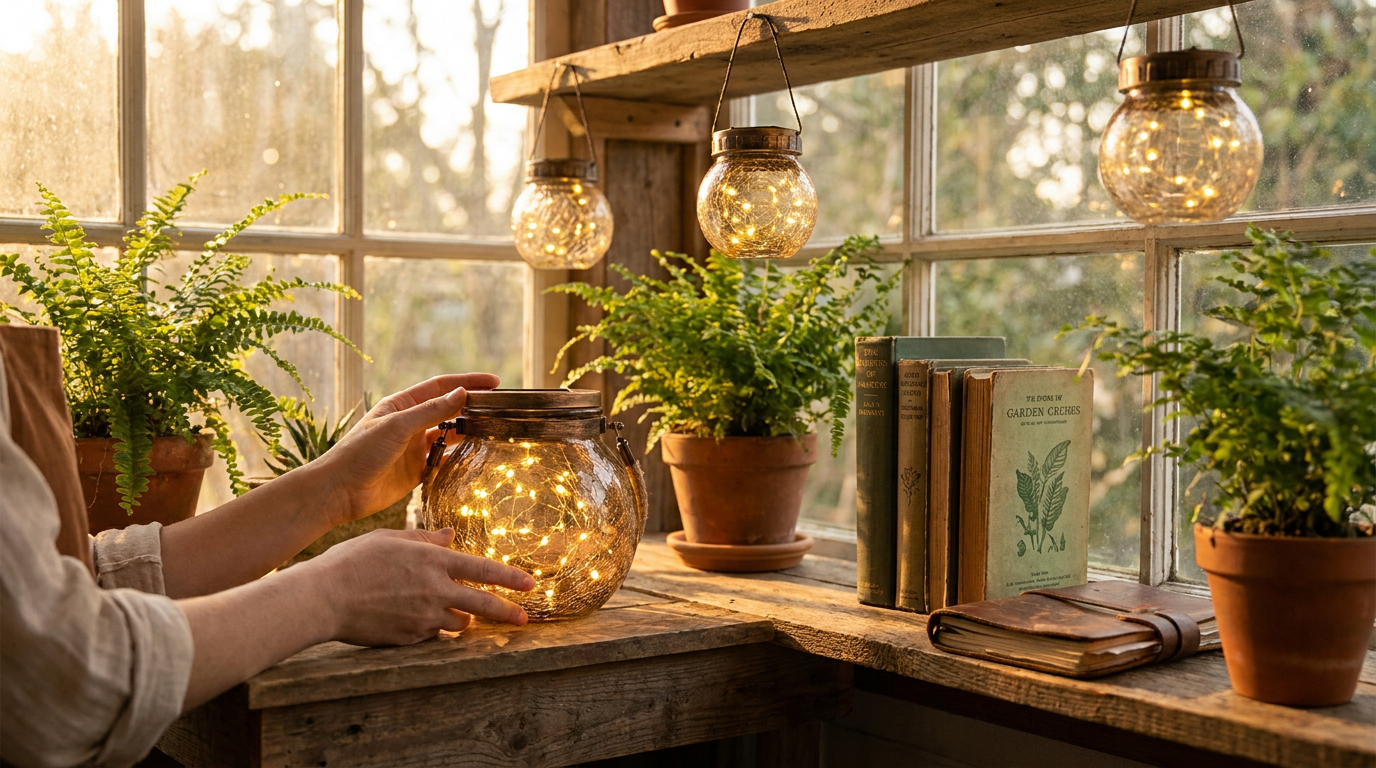
Vintage Solar Hanging Lantern Reliability Check
 Maya ChenContributing Editor
July 13, 2026 — The resurgence of retro aesthetics in landscape design has placed the vintage Solar Hanging Lantern at the center of a growing conflict between visual nostalgia and modern performance requirements. While homeowners increasingly seek out weathered metal finishes and Edison-style filaments, the technical limitations of these housing designs often compromise the core functionality of the photovoltaic cells.
The conventional wisdom says that antique-inspired lighting must sacrifice lumen output for ambiance, a sentiment echoed by the wide variety of rustic garden lanterns currently trending on Pinterest. According to design curators at Pinterest, these hanging garden lanterns are prized primarily for their silhouette rather than their illumination capacity. However, this aesthetic-first approach often results in undersized solar panels that struggle to maintain a charge through the night, especially when overshadowed by the very decorative ironwork that gives them their vintage appeal. The market currently sees a wide range of price points, with artisan versions on Etsy reaching over $100, though mass-market replicas typically trade durability for a lower entry price.
The 5 Technical Performance Benchmarks
Evaluating the performance of a vintage Solar Hanging Lantern requires a departure from purely aesthetic metrics toward rigorous hardware standards. The primary failure point in retro-styled units is the integration of the solar panel into the lid, which often lacks the surface area found in a modern farmhouse solar lantern for porch. Run the math: a standard vintage housing typically accommodates a 2-volt polycrystalline panel, which, despite its visual charm, provides significantly less conversion efficiency than monocrystalline alternatives. These units often feature a flicker flame effect to mimic oil lamps, but external testing from reviewers on YouTube highlights that these dancing flame effects are designed for atmosphere rather than functional visibility. To maintain a consistent discharge, the internal Ni-MH battery—usually rated at 600mAh to 1.2V—must receive at least six hours of direct sunlight. In many vintage designs, the decorative cage or "distressed" glass creates micro-shadows across the cell, reducing the effective charge time by up to 20%. Furthermore, while these units are frequently paired with a solar lantern with shepherd hook for elevation, the placement must be precise to avoid the light-blocking foliage common in traditional gardens. Unlike the simpler construction of hanging solar mason jar lights, the complex metalwork of vintage models requires an IP65 rating to prevent internal corrosion, yet many budget-tier models only reach IP44, leading to premature circuit failure in high-humidity environments.
Expert tip: Prioritize vintage models that utilize a remote solar panel cord if you intend to hang the lantern under a deep eave or heavy tree canopy, as the integrated panels on these specific designs are notoriously sensitive to partial shading.
Here’s the part nobody talks about: the "warm glow" of a vintage LED often operates at a color temperature of 2000K, which provides almost zero utility for path safety. I’ll change my mind when manufacturers successfully integrate high-capacity LiFePO4 batteries into these slim, retro frames without compromising the 19th-century silhouette that consumers demand.
Sources
Photo by Artūras Kokorevas on Pexels
- Vintage Solar Lights - Pinterest
- Vintage Solar Lantern - Etsy
- Solar Powered Flicker Flame Effect Retro Hanging Lantern for your ...