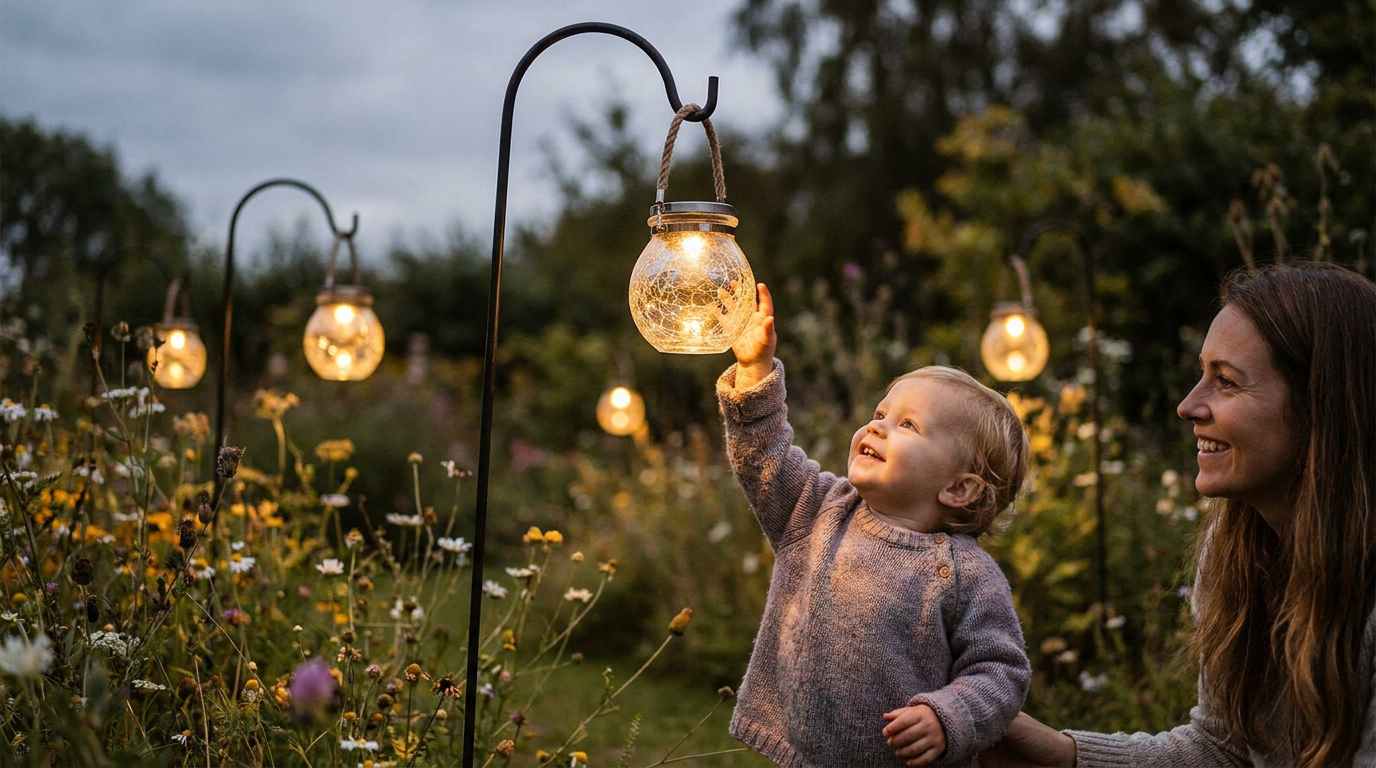
The Solar Hanging Lantern Shepherd Hook Setup
 Maya ChenContributing Editor
July 13, 2026 — Recent shifts in landscape design show a move toward mobile lighting infrastructure, specifically utilizing the Solar Hanging Lantern on portable shepherd hooks. While the market pushes for permanent hardwired installations, the flexibility of a staked hook system provides a more adaptable solution for changing seasonal light patterns.
The conventional wisdom says that any garden stake will suffice for outdoor illumination, but this ignores the physics of weight distribution and solar intake. According to LumaBase, a standard solar lantern with shepherd's hook relies on a specific NiMH AA battery configuration to maintain ambient lighting, which requires precise positioning to maximize photovoltaic conversion. When users prioritize aesthetics over panel orientation, they often find the runtime fails to meet the advertised duration because the hook's height or the lantern's housing creates self-shading.
The Professional Stability Check
Here's the part nobody talks about: the structural integrity of the hook is just as critical as the lumen output of the Solar Hanging Lantern. Most consumer-grade hooks fail because they are manufactured from thin-gauge steel that oscillates in high winds, causing the lantern to swing and potentially damage the internal LED filaments. A professional installation requires a dual-pronged or 'h' base stake to prevent rotation in the soil. Data from Gama Sonic indicates that high-performance garden lights can offer up to 8X the brightness of average pathway lights, but this intensity is only useful if the hook maintains a consistent vertical axis. Run the math: a lantern weighing two pounds on a 35-inch hook exerts significant leverage on the ground stake; without a minimum 6-inch burial depth in compacted soil, the system will lean within 48 hours of a rain event. Furthermore, the efficiency of the integrated solar panels depends on a clear 120-degree sky view, a factor often compromised when hooks are placed too close to eaves or dense foliage. If you are integrating a modern farmhouse solar lantern for porch or a vintage solar hanging lantern into your design, the hook must be rated for the specific weight of the glass and metal housing to avoid structural fatigue.
Expert tip: Use a digital inclinometer to ensure your shepherd hook is perfectly vertical; even a 5-degree tilt can reduce the solar panel's exposure by up to 15% depending on your latitude and the time of year.
When choosing your hardware, consider how hanging solar mason jar lights might require shorter, more rigid hooks compared to the larger silhouettes of a standard Solar Hanging Lantern. Proper spacing is equally vital; placing hooks closer than four feet apart often creates overlapping shadows that ruin the intended visual effect. I'll change my mind when manufacturers start including weighted counter-balances as a standard feature for taller stakes, but until then, the burden of stability rests on the user's installation technique. For those looking to add character to their walkways, the vintage solar hanging lantern offers a distinct aesthetic that remains functional only when paired with a heavy-duty support system.
Sources
- Solar Lantern with Shepherd's Hook - LumaBase
- Solar Garden and Pathway Light Shepherd Hook - Gama Sonic
- How to Hang Solar Lanterns on Shepherd Hooks - Pinterest