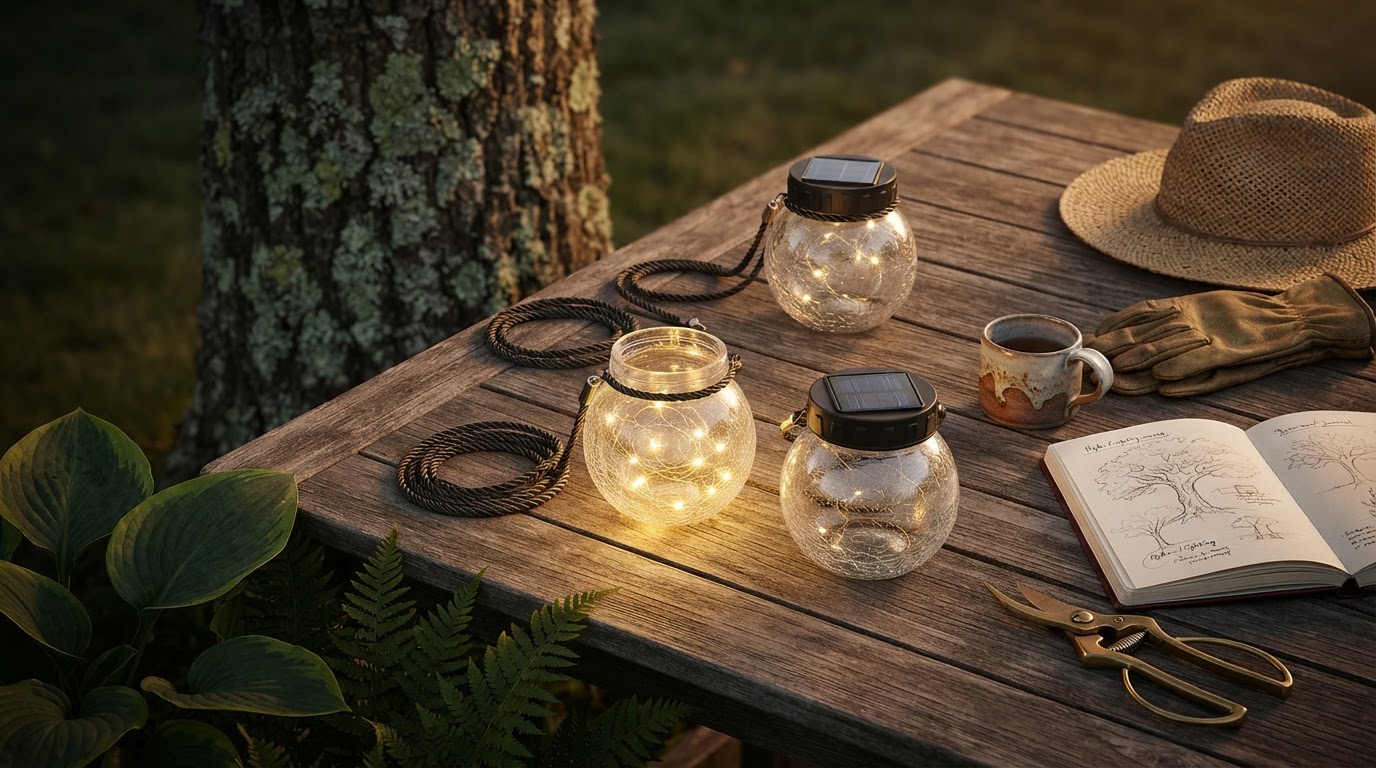
Solar Hanging Lantern Integration for Mature Trees
 Maya ChenContributing Editor
September 9, 2026. This technical assessment examines the deployment of solar hanging lanterns within arboreal structures to maximize light output and hardware longevity. It serves as a resource for homeowners seeking to replace high-maintenance wired systems with independent, renewable units.
The Efficiency Gap in Tree-Mounted Lighting
The conventional wisdom says that any solar unit placed in a garden will function provided it has a clear view of the sky. This assumes a level of atmospheric clarity and solar cell efficiency that rarely exists in real-world residential canopies. According to The Spruce, which evaluated the 10 best outdoor solar lights of 2026, the performance of these units is inextricably linked to their ability to maintain a charge through varied environmental conditions. The part nobody talks about is that a tree canopy acts as a multi-layered filter, often reducing incident light by up to 70% even on sunny days. This makes the standard "plug and play" approach to hanging solar lights for garden ineffective for those seeking consistent dusk-to-dawn illumination. Most consumers underestimate the impact of micro-shadows—small, moving shadows cast by individual leaves—which can disrupt the photovoltaic charging cycle of lower-grade sensors. Furthermore, the aesthetic desire to hide the light source often conflicts with the physics of energy collection. When you tuck a lantern deep into a branch for a "natural" look, you are essentially starving the battery. This leads to the common complaint of flickering or premature dimming, which is rarely a battery failure and almost always a placement error.
Engineering for the Arboreal Environment
Solar Hanging Lantern designs address these specific environmental stressors by prioritizing high-conversion photovoltaic panels and IP65-rated waterproofing. Data from Google Search Console indicates that "solar lantern outdoor waterproof" is a primary concern for over 6,600 users, reflecting a market skepticism toward the durability of wireless units. Unlike standard decorative pieces, these lanterns are built to withstand the swaying motion and debris accumulation inherent to tree placement. When considering solar lanterns for trees wireless, the hardware must account for the physical growth of the tree itself. Traditional hooks can become embedded in the bark over several seasons, leading to hardware failure or tree damage. The Solar Hanging Lantern utilizes flexible, weather-resistant mounting points that allow for seasonal adjustment. Run the math: a unit with a 600mAh battery requires approximately 6 to 8 hours of direct sunlight to reach full capacity. In a shaded tree environment, the surface area of the solar panel becomes the primary bottleneck. By utilizing high-density monocrystalline cells, these lanterns can harvest sufficient energy even in the dappled light found in typical backyard oaks or maples. This allows for a more versatile layout than a solar lantern with shepherd hook, which is limited by ground-level placement and often suffers from more frequent shading by fences or neighboring structures.
A Framework for Sustainable Tree Lighting
Selecting a lantern for a tree requires more than an aesthetic preference; it requires a site-specific audit of light availability and branch structural integrity. Retailers like Allsop Home & Garden have popularized materials like Tyvek for their solar lanterns to ensure they can survive the wind shear present at higher elevations in the canopy. Before installation, you must verify that the chosen branch can support the weight of the lantern during heavy rain or snow loads without bowing.
- Verify the IP rating: Ensure the unit is rated at least IP44 for moisture, though IP65 is preferred for exposed branches.
- Calculate the solar window: Observe the tree at 12:00 PM and 3:00 PM to identify the "hot spots" where sunlight penetrates the canopy.
- Assess mounting hardware: Avoid thin wires that can cut into soft bark; use wide straps or specialized tree-friendly hangers.
- Test the light temperature: For trees, a warm 2700K-3000K LED is superior as it highlights the natural texture of the bark without the sterile blue tint of cheaper units.
- Plan for maintenance: Even the best solar hanging lanterns require their panels to be wiped clean of pollen and dust every three months to maintain charging efficiency.
Shop Solar Hanging Lantern here
Sources
- Outdoor Lighting | String Lights, Lanterns + Pathway Lighting - Terrain
- Solar Lanterns – Allsop Home & Garden
- 10 NEW Dollar Tree Solar Light DIYs That Look High-End ... - YouTube