Selecting Solar Hanging Lanterns for Garden Layouts
 Sam VasquezBuying Guide Lead
October 9, 2026. This guide examines the technical and aesthetic requirements for integrating solar hanging lanterns into residential garden environments. It is intended for homeowners seeking to improve nighttime visibility and ambiance without the complexity of hardwired electrical systems.
The Challenge of Outdoor Illumination
Designing a garden that remains functional after sunset often presents a logistical hurdle. Traditional wired lighting requires trenching through established flower beds or hiring an electrician to run conduit, which can be both expensive and invasive to your landscape. Furthermore, the variability of outdoor conditions means that many standard decorative fixtures fail prematurely due to moisture ingress. According to Plow & Hearth, high-quality outdoor solar lighting is designed to withstand these elements while providing consistent illumination, yet many consumers struggle to find a balance between durability and light output. The primary issue I see with most garden setups is a lack of layering. Homeowners often rely on a single floodlight that creates harsh shadows rather than distributing light through the foliage. When you are looking for solar lanterns for trees wireless, the goal is to create depth rather than just brightness. If you're on a budget, you might be tempted by the basic plastic stakes found at big-box stores, but these rarely provide the lumen count necessary to actually see your walkway. Between these two approaches—expensive hardwiring or cheap stakes—solar hanging lanterns offer a middle ground that utilizes existing vertical structures like pergolas or branches. However, you have to account for the specific light-soak requirements of your region. A lantern placed in a deep-shade fern garden will never reach its full charge, leading to flickering or total failure by midnight. This is where placement becomes more than just an aesthetic choice; it is a functional necessity.
How Solar Hanging Lantern Solves the Garden Layout
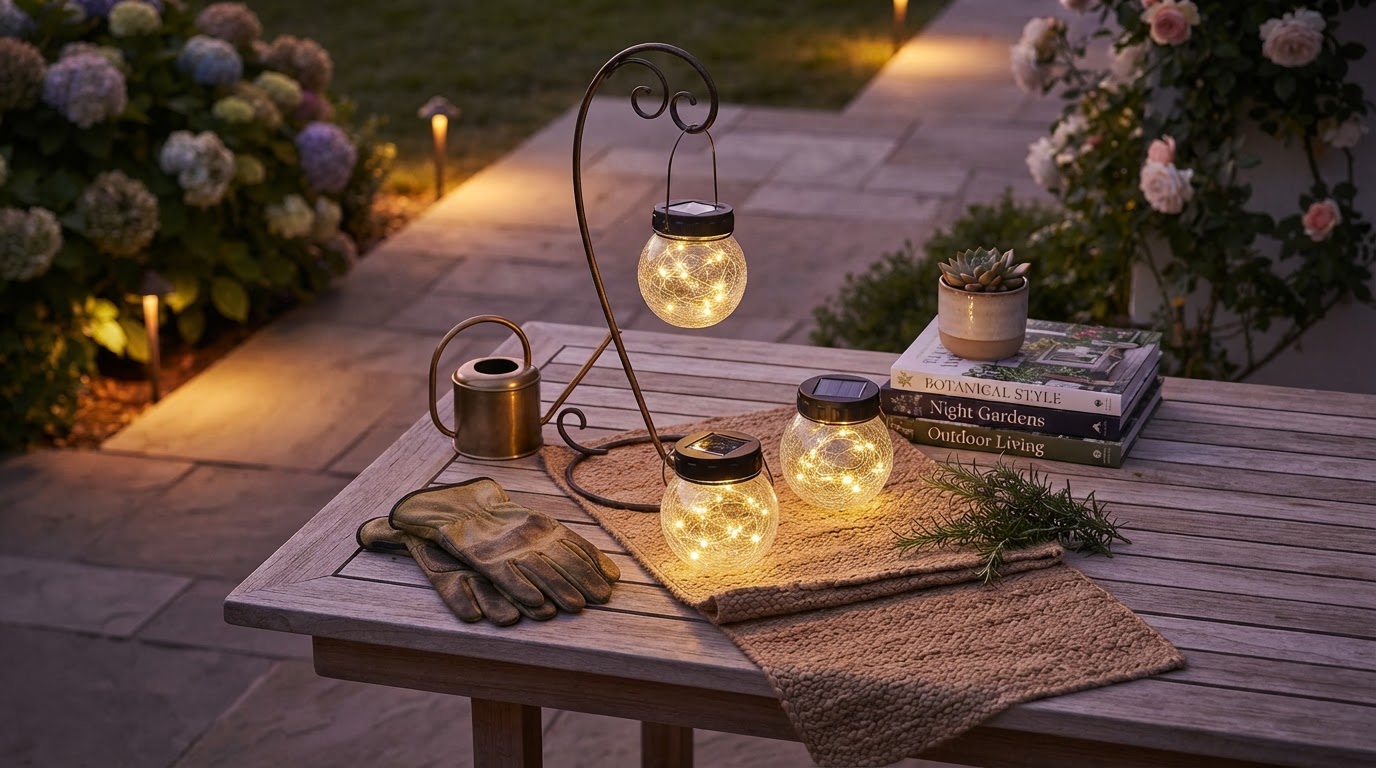
Solar Hanging Lantern addresses the common pain points of garden lighting by prioritizing a waterproof build and versatile mounting options. Based on search data, the most sought-after feature for these units is a "solar lantern outdoor waterproof" rating, which typically translates to an IP65 or higher standard. This ensures the internal lithium-ion battery and LED circuitry remain dry during heavy rain or snow. Unlike stationary path lights, these lanterns can be moved as your garden grows. For instance, a solar lantern with shepherd hook allows you to place light exactly where the sun hits during the day, even if that spot is in the middle of a flower bed where no trees exist. The technical advantage here is the integration of high-efficiency monocrystalline solar panels directly into the lid of the lantern. This design eliminates the need for external wiring or separate solar bricks that clutter the ground. Here's what I'd actually buy: a metal-framed lantern with a warm white LED (around 2700K to 3000K). The metal housing provides the weight necessary to prevent excessive swinging in the wind, while the warm temperature mimics traditional incandescent bulbs rather than the clinical blue light of cheap LEDs. I have found that solar hanging lanterns for outdoors work best when they are clustered in groups of three at varying heights. This breaks up the visual plane and makes a small garden feel significantly larger. Skip this if you have a yard that is entirely covered by a dense canopy with zero direct sunlight; no amount of high-end circuitry can overcome a total lack of UV exposure. In those specific cases, you are better off with a plug-in system.
The Garden Lighting Decision Framework
Choosing the right fixture requires a quick audit of your specific outdoor environment. You need to consider the material of the lantern, the battery capacity, and the intended mounting surface. Allsop Home & Garden notes that products built for the outdoors should be able to live outside year-round, which is a standard I highly recommend sticking to. When evaluating your options, look for lanterns that use replaceable rechargeable batteries; many cheaper units are sealed, meaning once the battery reaches its cycle limit, the whole fixture becomes electronic waste. If you are planning to hang these from structures, ensure the hardware is rust-resistant stainless steel or powder-coated aluminum. I prefer the look of solar hanging lanterns for outdoors that feature a flicker-flame effect for seating areas, but I stick to steady-on bulbs for task areas like outdoor kitchens or steps.
- Sun Exposure Check: Ensure the location receives at least 6 hours of direct sunlight daily.
- Material Durability: Opt for metal or heavy-duty Tyvek over thin plastics to prevent sun-bleaching and cracking.
- Lumen Output: Select fixtures with at least 15-20 lumens for decorative accenting and 50+ for path safety.
- Battery Access: Confirm the battery compartment is accessible for future replacements to extend the product life.
- Mounting Logic: Use a solar lantern with shepherd hook for open areas and wireless tree mounts for perimeter lighting.
Shop Solar Hanging Lantern here
Sources
- Solar Lighting - Plow & Hearth
- Solar Lanterns – Allsop Home & Garden
- 25 Brilliant Ways To Use Dollar Tree SOLAR LIGHTS In Your BACKYARD