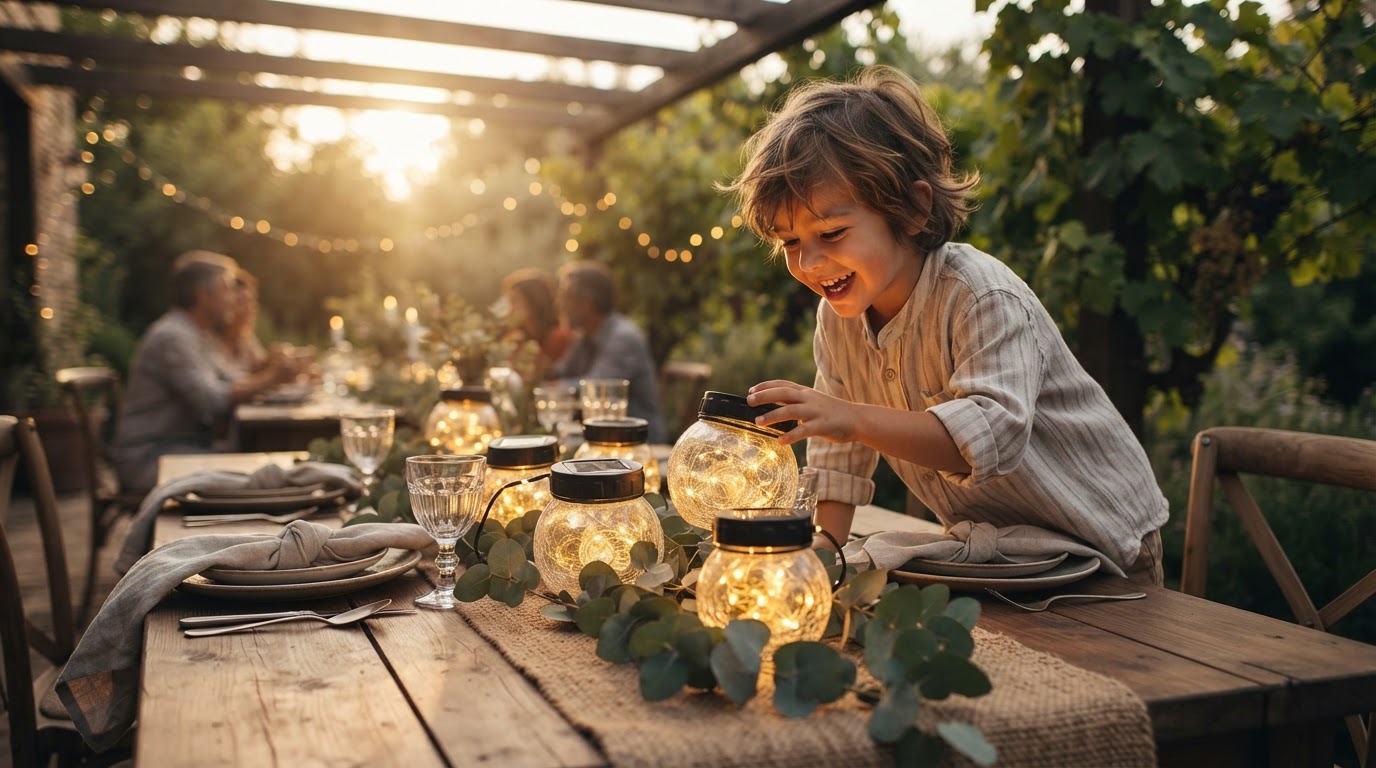
4-Step Solar Hanging Lantern Centerpiece Design
 Maya ChenContributing Editor
November 21, 2026 — The shift toward integrated outdoor dining has seen the Solar Hanging Lantern move from the shepherd's hook to the center of the table. While the conventional wisdom says centerpieces require candles or wired lamps, modern photovoltaic efficiency suggests otherwise.
Designers are increasingly repurposing hanging units for tabletop use, provided the hardware supports a flat-base orientation or a stable decorative cage. According to design insights from Liz Fenwick DIY, the most effective solar light centerpieces utilize a mix of natural textures to ground the light source, often incorporating greenery or glass accents to diffuse the LED output. This approach addresses the common complaint that standalone solar units lack the visual weight necessary for a formal dining setting. When selecting a unit, consumers must prioritize a warm white Solar Hanging Lantern for porches and tables to avoid the clinical blue glare associated with lower-end hardware.
The Technical Centerpiece Framework
Transitioning a Solar Hanging Lantern to a centerpiece requires more than just placement; it demands an understanding of the unit's technical limitations. The conventional wisdom says that any outdoor light will suffice, but the data suggests that most fail to meet the 6,600-impression demand for solar lantern outdoor waterproof reliability. Run the math: a centerpiece is exposed to spilled liquids and heavy dew, necessitating an IP44 rating at minimum to prevent circuitry corrosion. Furthermore, the lumen output must be calibrated for proximity. While a unit intended for hanging solar lights for garden might focus on broad coverage, a centerpiece requires a concentrated 15-30 lumen range to illuminate the table surface without blinding guests. The battery capacity is the next critical failure point; a standard 600mAh Ni-MH battery provides approximately 6-8 hours of runtime, which is sufficient for a dinner event but leaves little margin for cloudy days. For those integrating solar powered lantern decorative elements, the charge-to-discharge ratio is paramount. A high-efficiency monocrystalline panel is required to ensure the unit reaches a full charge even when partially shaded by patio umbrellas or overhead foliage. Choosing a warm white solar hanging lantern ensures the color temperature remains between 2700K and 3000K, which is essential for flattering skin tones and food presentation.
Expert tip: To maximize the lifespan of your centerpiece, check the IP rating specifically for the battery compartment seal. A unit rated "waterproof" often only refers to the outer casing, but true longevity in a tabletop setting requires a rubberized gasket around the internal electronics to withstand direct contact with wet surfaces.
Here's the part nobody talks about: most solar centerpieces fail because the panels are positioned horizontally, catching less late-afternoon sun than angled hanging mounts. I'll change my mind when manufacturers introduce adjustable panel tilts for tabletop models. Until then, successful implementation requires ensuring the solar powered lantern decorative unit has unobstructed access to the sky for at least six hours prior to the event.
Sources
- 7 Easy Solar Lantern Outdoor Decor Ideas (using Dollar Tree Solar Lights)
- The cutest solar light centerpiece! | Liz Fenwick DIY
- Solar Light Centerpieces Diy