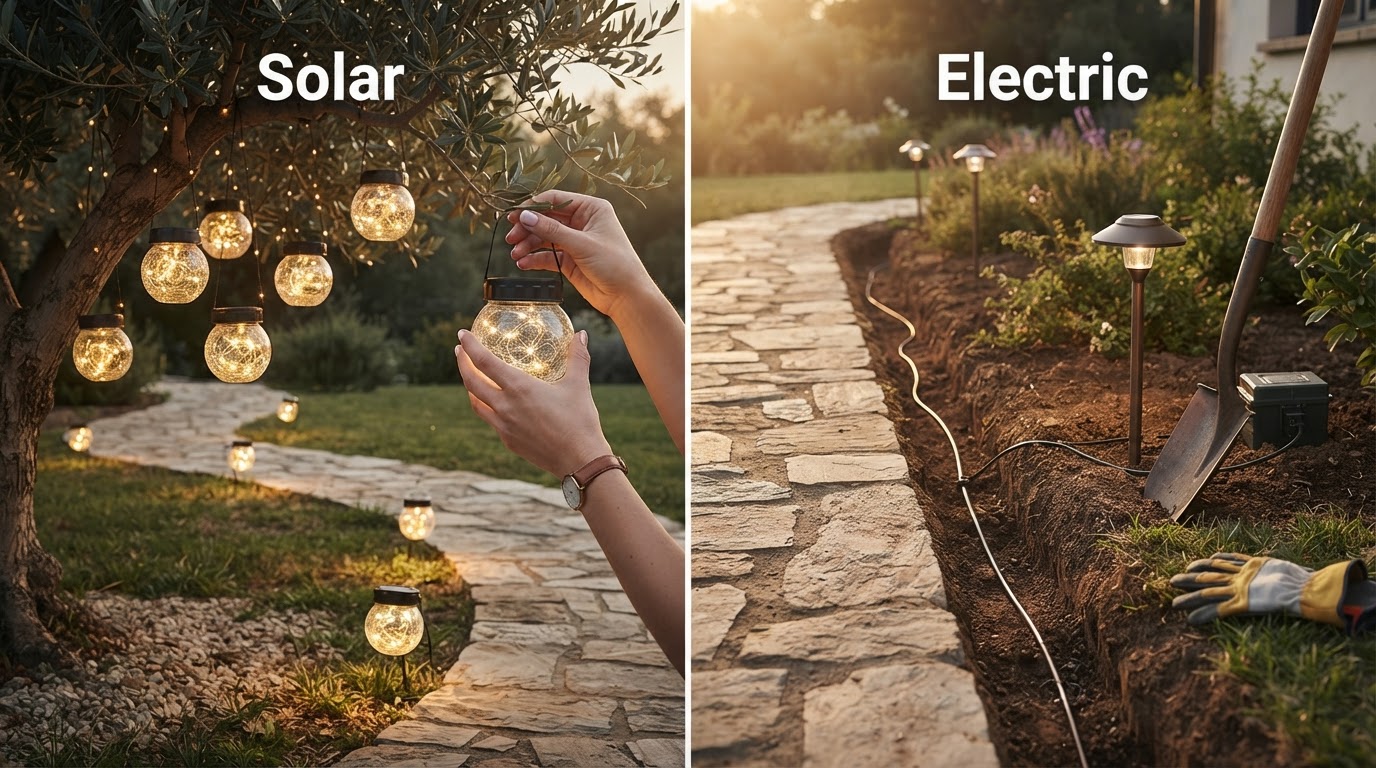
Solar vs Electric Pathway Lights: Cost, Installation, and Brightness
When illuminating walkways, garden paths, or driveways, homeowners frequently evaluate solar vs electric pathway lights. Each option delivers specific benefits depending on your budget, landscape design, and technical skills.
Installation Effort: DIY Placement vs Trenching Cables

Installing hardwired electric pathway lights requires digging trenches across your lawn, laying low-voltage cable underground, and connecting a weatherproof transformer to an exterior outlet. If your pathway crosses a paved walkway or driveway, installation requires cutting concrete or driving conduit beneath pavers.
Solar pathway fixtures require zero wiring or trenching. Units like the Solar Hanging Lantern offer versatile placement, engineered to be Suitable for hanging or tabletop placement or hung from shepherd hooks along garden borders in minutes.
Long-Term Financial Impact: Energy Savings and Maintenance

Electric pathway lights incur ongoing energy costs on your monthly utility bill, along with potential transformer repair expenses over time. Solar pathway units operate free of power costs. Equipped with a Polycrystalline silicon solar panel for higher efficiency, these fixtures store maximum energy daily with a simple 6-8 hours charging cycle.
To view a complete cost breakdown between grid-connected and solar landscape setups, review [the main guide].
Aesthetics and Versatility Along Walks and Driveways
Hardwired path lights provide continuous output, but their fixed positions make layout changes difficult. Decorative solar lanterns featuring a Ribbed/Cracked glass design for light projection cast unique geometric light patterns onto walkways and soil, adding visual texture while allowing effortless rearrangement whenever your garden layout changes.
Read the full guide: Solar vs Electric Outdoor Lighting: The Ultimate Guide for Homeowners